


Every year, we ask indie authors about their experiences with writing, publishing, and marketing. We’ve been running this survey since 2016, and it’s one of my favorite projects of the year.
For 2025, we had 1,346 responses from authors around the world.
-
96% of respondents are already published
-
4% are not yet published but actively working toward it
The survey skews toward serious, prolific indie authors (that’s our audience!), and all data is self-reported, especially income. As always: Correlation ≠ causation. When we say “high earners tend to…,” we’re not saying “if you do this one thing, you’ll get rich.” We’re describing patterns, not guarantees.
This year’s survey covered everything from income and catalog size to email lists, direct sales, KU vs wide, and author sentiment.
Grab a coffee (or your favorite writing snack) and let’s dig in. ☕️
Table of Contents
1) How Are Authors Published in 2025?
3) Income Breakdown: How Much Are Authors Earning Each Month?
1) How Are Authors Published in 2025?
The indie author community continues to thrive, with 77% of respondents identifying as self-published, while 17% described themselves as hybrid authors, Only 5% of authors remain fully in the traditionally published camp.
Indie publishing is no longer anyone’s “Plan B.” It’s a primary, intentional path that serious authors choose because it lets them:
-
Control rights, pricing, and packaging
-
Move faster than traditional cycles
-
Experiment with series, direct sales, and special editions
💡What It Means for You
If you’re indie (or indie-curious), you’re not on the fringes—you’re part of a mature, thriving ecosystem. That means:
-
You don’t need permission to build a real author career.
-
You do need to think like a small business owner, not just a creator.
2) Motivation & Goals
Motivation for Publishing: What Drives Indie Authors?
When asked about their primary motivation for publishing a book, authors offered a range of responses, with less than half focused on financial goals:
- 40% of respondents said, “I want to make money from my book,” highlighting a strong financial drive for many indie authors.
- 20% indicated that “I want my story to be told,” showing a significant portion of authors are motivated by sharing their personal or creative narratives.
- 16% want to become “a well-known author,” indicating a desire for recognition and status within the literary community
- 15% stated that “writing is a hobby I enjoy,” reflecting the passion and enjoyment they find in the writing process itself.
- 9% selected “other,” with a mix of unique or alternative motivations not captured by the main categories.
There are two big takeaways around motivation:
–> Not everyone is here for the money. Many authors are driven by: Expression, Legacy or Joy of the craft.
–> Money-motivated authors do earn more on average.
Authors who checked “I want to make money” are:
-
More likely to treat their writing as a business
-
More likely to invest in covers, editing, and marketing
-
More likely to stick with tactics that move the needle
There’s a strong correlation between saying “my goal is to make money” and actually landing in the higher-income brackets.
💡What It Means for You
-
If your main goal is creative fulfillment → you’re already winning every time you finish a book.
-
If your main goal is income → you’ll want to:
-
Set business-style goals
-
Invest (within your means) in packaging and marketing
-
Make decisions based on data, not vibes
-
Both paths are valid. Just be honest with yourself about which game you’re actually playing.
3) Income Breakdown: How Much Are Authors Earning Each Month?
While 44% of authors earn $100 or less, the majority—56%—are earning over $100 monthly from their writing. Authors in the $500 – $5,000 range make up 20% of respondents, while authors making over $5,000 per month account for 13% of respondents. 8% of authors who answered the survey report making over $10,000 per month.
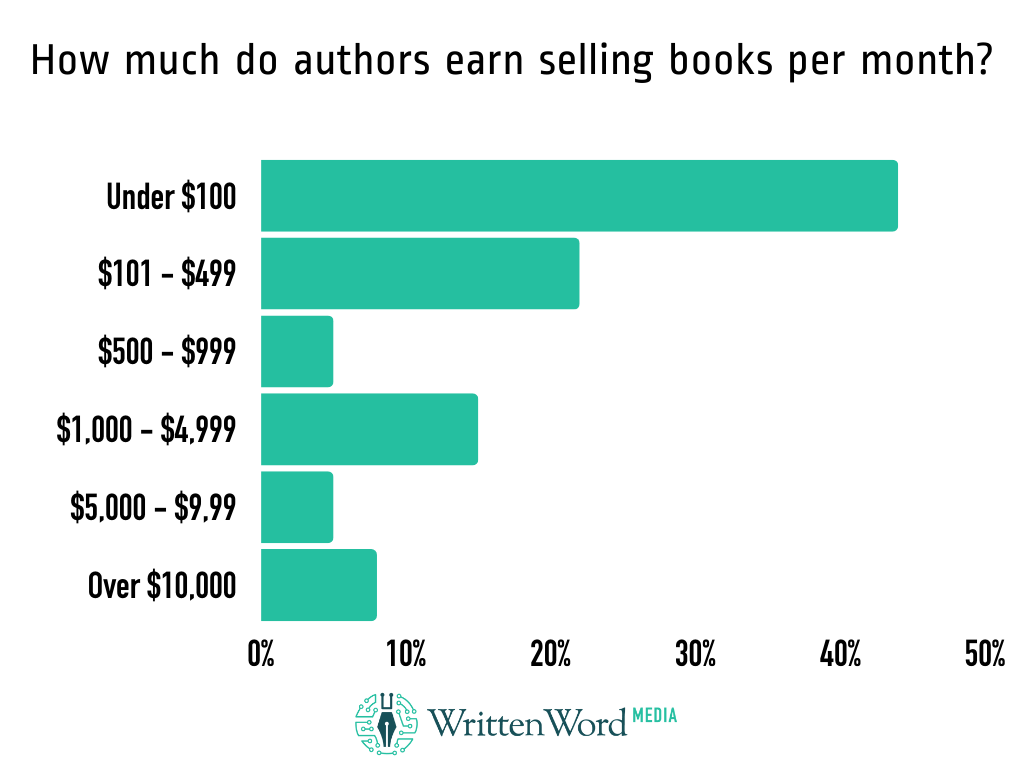
A few key patterns emerge from the data:
-
There is a large “early stage” group under $100/month. Many of these authors:
-
Have just a few books
-
Haven’t built an email list yet
-
Spend little or nothing on marketing
-
-
The $100–$1,000 group is the “in motion” crowd. They’re:
-
Publishing more consistently
-
Experimenting with promo sites and email
-
Figuring out what works
-
-
The $1,000+ group almost always has:
-
More books (often 10+, and very often series)
-
An active email list
-
Regular marketing spend
-
A mindset: “This is a business”
-
💡What It Means for You
-
If you’re under $100/month: you’re not failing; you’re early.
-
If you’re earning $100–$1,000/month, you’ve proven your books can sell—your next lever is scale (more books, better packaging, stronger marketing).
-
If your dream is full-time author income, the survey shows it’s absolutely possible—but the authors doing it are:
-
Prolific
-
Strategic
-
Patient
-
If your primary goal is to make money from your writing, this data confirms that making money from your writing is possible. If you’re already earning over $100 per month from your writing, you’re on the right track – the next step is scaling up. If you’re currently in the lower brackets, remember that it’s common to start small, and that many authors grow their income steadily over time.
If your motivation for writing is driven by creativity or personal fulfillment, don’t be discouraged by lower earnings. Writing for the love of storytelling or as a creative outlet is incredibly rewarding in its own right.
4) Genres
Before we look at how different genres perform at various income levels, it’s important to understand which genres were represented in this year’s survey.
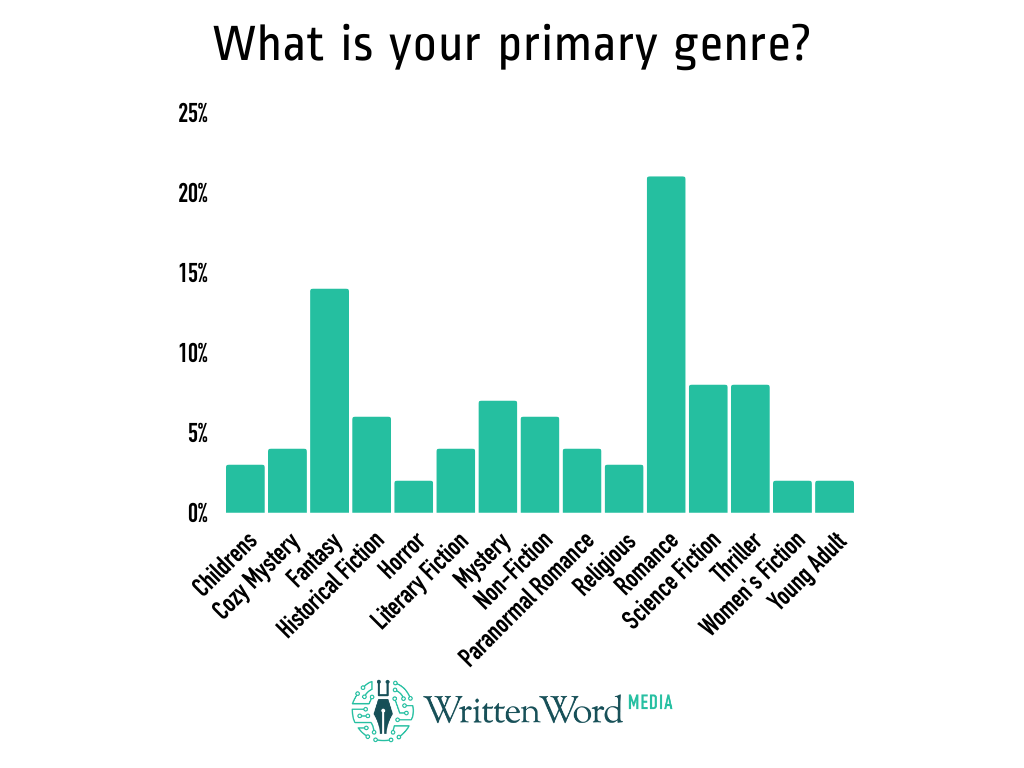
Among the 1,346 authors who responded, the largest primary genres were: Romance – 21% (276 authors), Fantasy – 14% (186 authors), Science Fiction – 8% (101 authors), Thriller – 8% (103 authors), Mystery – 7% (95 authors), Historical Fiction – 6% (73 authors) and Non-Fiction – 6% (79 authors).
A number of smaller but important genres also appeared, including: Cozy Mystery, Literary Fiction, Paranormal Romance, Children’s, Women’s Fiction, Young Adult, Horror, and Religious Fiction & Non-fiction.
⚠️ A Note on Bias
Because Written Word Media’s audience skews toward commercial indie fiction, our genre mix reflects that:
-
Romance, fantasy, sci-fi, mystery, thriller, and genre fiction are all well-represented.
-
More niche or traditionally print-focused genres—like children’s books, literary fiction, and religious nonfiction—appear in smaller numbers.
That means the income patterns below reveal real signals, but they may reflect indie-author ecosystem dynamics more than the entire book market.
With that context, here’s what we found.
Which Genres Over-Index Among Higher Earners?
Across the entire dataset, a few genres show up more frequently as income rises.
Romance (All Romance)
-
21% of authors overall
-
~44% of the Over $10k group
-
~38% of $5k–$10k
-
~35% of $1k–$5k
-
Only ~12% of Under $100
👉 Romance authors are roughly twice as common in the top-earning tiers as you would expect from their share of the survey population.
Paranormal Romance
-
4% overall
-
~11% of Over $10k authors
-
Drops to ~3% in Under $100
Genre takeaway: Paranormal Romance has one of the strongest correlations with high income, showing ~2.5× its expected presence in the top tier.
Cozy Mystery
-
4% overall
-
6–9% of authors earning above $500/month
-
Only ~1.7% in Under $100
Genre takeaway: Cozy authors consistently appear more often in every income bracket above $500, and clearly decline toward the bottom.
Genres More Common in Lower Income Brackets
A few genres appear more frequently among authors earning under $100/month, and far less among high earners. This doesn’t reflect quality or potential—just market realities for indie publishing.
Children’s
-
3% overall
-
5.5% in Under $100
-
Almost absent among higher earners
Reasoning: Children’s books often rely on illustration cost, school channels, in-person events, and gatekeepers, which can make indie discoverability harder.
Literary Fiction
-
4% overall
-
~7% in Under $100
-
Essentially absent from $5k+ brackets
Reasoning: Literary fiction often relies more on prestige, awards, and traditional coverage than the indie-style marketing tactics that scale.
Religious Non-fiction
-
1% overall
-
1.7% in Under $100
-
Almost none in the higher brackets
Reasoning: Smaller audiences, niche channels, and lower digital conversion can all play a role.
Genres That Lean Toward Lower/Mid Brackets
These genres are not over-represented at the bottom, but they aren’t common at the very top either.
Non-Fiction (General)
-
6% overall
-
9–10% in the $100–$1,000 brackets
-
Rare among high earners
It’s also important to recognize that non-fiction authors often earn income differently than fiction authors. For many non-fiction writers, the book itself functions as a branding asset—a credibility builder, a calling card, or a lead magnet that drives readers into higher-value offerings such as:
-
speaking engagements
-
consulting
-
coaching
-
courses
-
workshops or trainings
-
newsletters or memberships
Because their revenue often comes from these adjacent services, their book income alone typically sits in the lower or mid brackets, even when their overall business income is much higher. In other words, non-fiction authors may appear under-represented in the top royalty tiers, but that doesn’t necessarily reflect the full financial picture of their author business.
Young Adult
-
2.5% overall
-
3.7% in $100–$500
-
3.6% in Under $100
-
Almost no YA authors in the top brackets
The YA digital market is smaller than its print/trad counterpart, which shapes indie earning potential.
💡 What It Means for You
-
Commercial genre fiction (Romance, Paranormal Romance, Cozy Mystery) continues to have the clearest path to high monthly royalties in the indie ecosystem, driven by:
-
Read-through from series
-
High consumption rates
-
Strong, trope-driven reader communities
-
Effective digital marketing channels
-
-
Children’s, literary fiction, religious nonfiction, and similar genres require different success strategies, including:
-
Events
-
School and library outreach
-
Speaking, workshops, or services
-
Local community channels
-
Alternate definitions of success
-
-
Fantasy, sci-fi, thriller, historical fiction, and mystery make up a large share of indie authors and have strong mid-range earning potential—with some high earners in each, usually those who:
-
Write in series
-
Publish consistently
-
Target clear subgenre niches
-
Above all:
👉 No genre guarantees income, but understanding how your genre performs on average helps you plan your strategy, timeline, and expectations—with far more clarity.
5) Catalog Size
One of the strongest predictors of earning potential in indie publishing continues to be catalog size—the number of books an author has published. The 2025 data shows a clear and consistent pattern: The more books an author has published, the more they tend to earn.
Here’s how the average number of published books breaks down across income brackets:
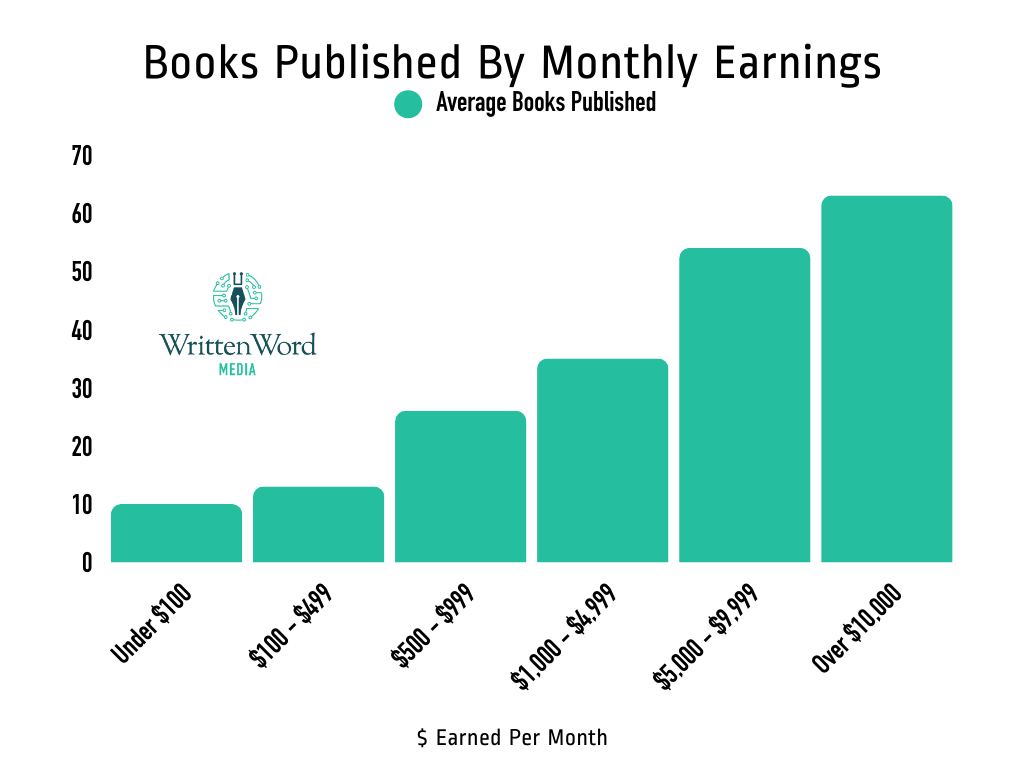
2025 Patterns: Catalog Size vs Income
From the 2025 survey:
-
Authors with 1–3 books: About 80% fall into the under $100/month band.
-
Authors with 5–9 books:
-
Median income jumps to around $50/month
-
Many more enter the $100–$1,000 band.
-
-
Authors with 10+ books: This is where we start to see a steeper income ramp.
-
Authors with 25+ books:
-
Median income ≈ $3,000/month
-
40%+ of them earn $5,000+/month
-
The Series Effect
For the very high earners, it’s not just “lots of books.” It’s:
-
Lots of books
-
In series
Why that matters:
-
If you spend $100 on a promo and only have one book, the reader can only buy… that one book.
-
If Book 1 leads into a 7- or 10-book series, that same $100 can turn into:
-
Multiple full-price sales
-
A long-term fan
-
Marketing spend gets amortized across the whole series. That’s where you start to see exponential, not incremental, returns.
💡What It Means for You
Building a backlist takes time, but it’s one of the most important strategies for long-term success in indie publishing.
Your next best marketing move might simply be: write the next book.
If you love standalones, consider loose series (shared world, shared characters) so you can still benefit from series read-through.
Backlist is power. The authors making $5k, $10k, $20k+ per month almost always have:
- Deep series
- A consistent release history
Every book you add to your backlist:
-
Expands your digital footprint
-
Gives readers another entry point into your world
-
Boosts your chances of read-through
-
Creates more opportunities for promotions, box sets, and bundles
Whether you’re at 1 book or 21, the path forward is the same: keep writing, keep publishing, and think long-term.
6) Formats
Indie authors continue to diversify the formats they publish in, but one thing hasn’t changed: eBooks and paperbacks remain the backbone of indie publishing.
Here’s the breakdown of which formats authors currently offer:
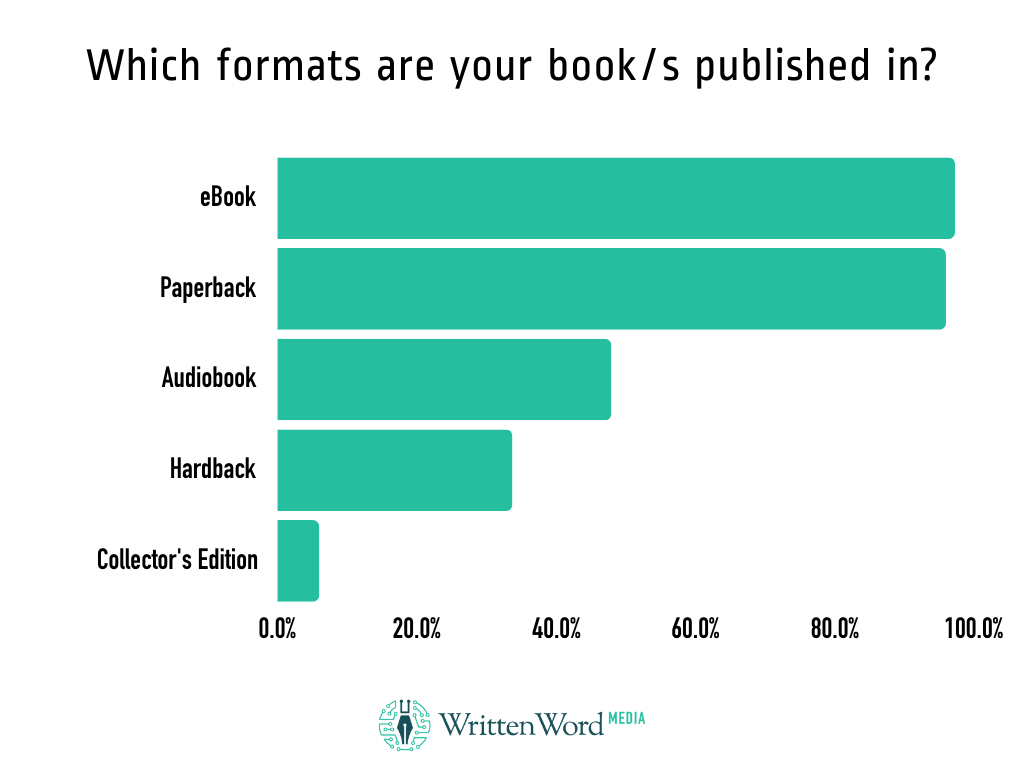
A few clear trends emerge from this year’s data:
1. eBooks and paperbacks are essentially universal.
Nearly every author surveyed publishes in both eBook and paperback—the two formats that remain the most accessible, most affordable to produce, and most in-demand on major retail platforms.
-
eBooks (98%): Still the format where indie authors rely most heavily for discoverability and global distribution.
-
Paperbacks (97%): Almost universally adopted, thanks largely to streamlined POD solutions through KDP and IngramSpark.
2. Audiobooks continue strong growth.
Over half of authors (51%) now have at least one audiobook—an impressive number given that:
-
Audiobooks are more expensive to produce
-
They typically require separate distribution channels
-
They can take longer to break even
But demand remains high, and indie authors are increasingly viewing audio as a long-term investment that deepens reader engagement and increases lifetime value.
3. Hardbacks are becoming more common.
With 36% of authors offering hardcover editions, the format has moved from “nice-to-have” to a meaningful part of the indie toolkit, especially for:
-
Collectible editions
-
Library distribution
-
Direct sales
-
Authors in fantasy, sci-fi, and historical fiction, where premium formats perform well
The rise of new POD hardback options has clearly made this format more accessible.
4. Collector’s Editions remain niche but strategic.
Only 8% of authors offer a collector’s edition, but this small segment ties directly into two major industry trends:
-
Special editions with sprayed edges, foil stamping, or custom art
-
Higher-margin direct sales at events or via Shopify/WooCommerce stores
Collectors’ editions are especially popular in fantasy, romance, and fan-driven genres where superfans want physical books that feel special.
💡What It Means for You
As you’re planning your publishing strategy for 2026:
-
eBook + paperback is the essential baseline for indie authors.
-
Adding audio or hardback can expand your reach and credibility—but they are better positioned as Phase 2 investments unless you already have strong reader demand.
-
Collector’s editions are best for authors with:
-
An established fanbase
-
A strong direct-sales strategy
-
High engagement in reader communities
-
Genres with a collector culture (fantasy, romance, sci-fi)
-
As production tools improve and direct sales gain traction, expect more authors to explore premium formats in the coming years.
7) Revenue Channels & Kindle Unlimited (KU)
When it comes to generating revenue, Amazon is still the dominant platform for indie authors, with 83% of respondents naming it as their top revenue source. The percentage of authors who named Amazon as their top revenue source dropped for a second year – from 91% in 2023 to 87% in 2024 and 83% this year. When looking at which sources generated the 2nd most revenue for authors, Amazon still topped the list, but in-person sales, Apple, Kobo, and direct sales were much more visible in that #2 slot.
KDP Select vs Wide in 2025
We also asked authors how they use KDP Select (KU) and the answers were as follows:
-
38% of authors– “All my books are in KDP Select”
-
30% of authors – “None of my books are in KDP Select” (fully wide)
-
The rest – A mix (some titles in KU, some wide)
When we looked at income brackets:
-
Among authors earning over $5,000/month:
-
43% had all their books in Select
-
15% had none in Select (fully wide)
-
The rest had mixed catalogs
-
Many high earners are in KU, but not all. There are successful authors:
-
Fully wide
-
Fully KU
-
And a big chunk doing both
Important: Correlation vs Causation
This data does not mean: “To make $5k+/month, you must be in KU.”
It does mean:
-
Many high earners choose KU because:
-
Discoverability is often easier
-
Page reads provide a separate revenue stream
-
But there is a meaningful group of high-income, fully wide authors too.
💡What It Means for You
-
There is no single correct path:
-
Fully KU can work
-
Fully wide can work
-
A mix can work
-
-
You can experiment:
-
Put a series in KU for 90 days
-
Try taking it wide for the next 90
-
Compare real numbers
-
Pick a strategy that:
-
Matches your values (e.g., not wanting exclusivity)
-
Fits your stage (KU is often easier for discoverability early on)
-
And that you’re willing to execute on consistently
8) Direct Sales
2025 Direct Sales Adoption
From the 2025 survey:
-
About 30% of authors are already selling direct (from their own site or store).
-
Among those who aren’t selling direct yet, about 30% say they plan to start in the next 12 months.
So we have:
-
A solid minority currently selling direct
-
A large pipeline of authors who want to add direct as a channel
When we slice by income:
-
Among authors earning $10,000+/month, roughly half sell direct.
-
Among lower earners, direct sales are much less common.
Why High Earners Use Direct Sales
Direct sales let you:
-
Keep a larger percentage of each sale
-
Build a customer list you control
-
Offer:
-
Special editions
-
Signed copies
-
Bundles & upsells
-
But they also come with:
-
More logistics (customer service, fulfillment)
-
A need for traffic (you still have to do marketing!)
When Direct Sales Are Too Early
We’re also seeing a pattern of:
-
Early-stage authors going hard into direct
-
Ending up with boxes of books in the garage and very few buyers
The missing ingredient is usually:
-
An established audience (often via email)
-
Proven demand for your existing books
💡What It Means for You
Direct sales are powerful, but they’re not “easy mode.” Consider:
-
If you already have:
-
A meaningful email list
-
Readers asking for signed copies / special editions
→ Direct might be a great next step.
-
-
If you’re early and mostly unknown:
-
Focus first on discoverability on big retailers
-
Build your email list
-
Then layer in direct when you have people to send there
-
Tools like BookFunnel, Shopify, and others make direct sales more accessible—but they’re multipliers, not magic.
9) Cover Design
2025 reinforced something we love to see: Authors overwhelmingly agree that cover design is the #1 factor in selling a book. Across experience levels and income tiers, book cover came out on top when we asked what matters most for selling books.
How Much Are Authors Spending on Covers
-
Low earners (≤ $100/month)
-
Over half spend $0–$100 on covers.
-
Many DIY using Canva, templates, or a helpful friend.
-
-
Mid-range earners ($100–$1,000+/month)
-
Typically invest $100–$499 per cover.
-
Often working with freelance designers who specialize in their genre.
-
-
High earners ($5,000+/month)
-
Most spend at least $250, and often $250–$1,000 per cover.
-
Very few spend $0.
-
A small fraction spend $2,000+, but:
There’s no clear correlation between spending $2k+ and higher income.
-
The importance of a high-quality cover can’t be overstated. However, it’s not “the more you spend, the more you earn.” It’s:
-
“Spend something to get a professional, on-genre cover, and you give your book a fighting chance.” OR
- “Spend nothing but make sure that you get objective feedback on whether your cover is good.
Genre Signaling vs Plot Art
One of the most important mindset shifts: Your cover’s job is to signal genre, not summarize plot.
Readers scan for visual shorthand:
-
Dark background + bold serif text + spaceship → Sci-Fi
-
Pastel illustration + cute fonts → Rom-com
-
Moody figure + city skyline → Urban fantasy / thriller
If your cover doesn’t “fit” when dropped into the Top 10 of your category, you’re making it harder for readers to say yes.
💡What It Means for You
-
If your budget is tight:
-
DIY is okay, as long as you get objective feedback and compare against genre bestsellers.
-
-
As revenue grows:
-
Move into the $250–$500 range for covers if you can. That seems to be a sweet spot for many high earners.
-
-
Be ruthless (kindly!) about changing a cover that isn’t working. Emotional attachment to a DIY cover is one of the biggest blockers we see.
10) Editing
Editing remains one of the most important components of a strong, professional book—but indie authors take a wide range of approaches when it comes to how much they invest. The 2025 data shows a broad spread in editing spend, with a surprisingly large number of authors still spending nothing at all.
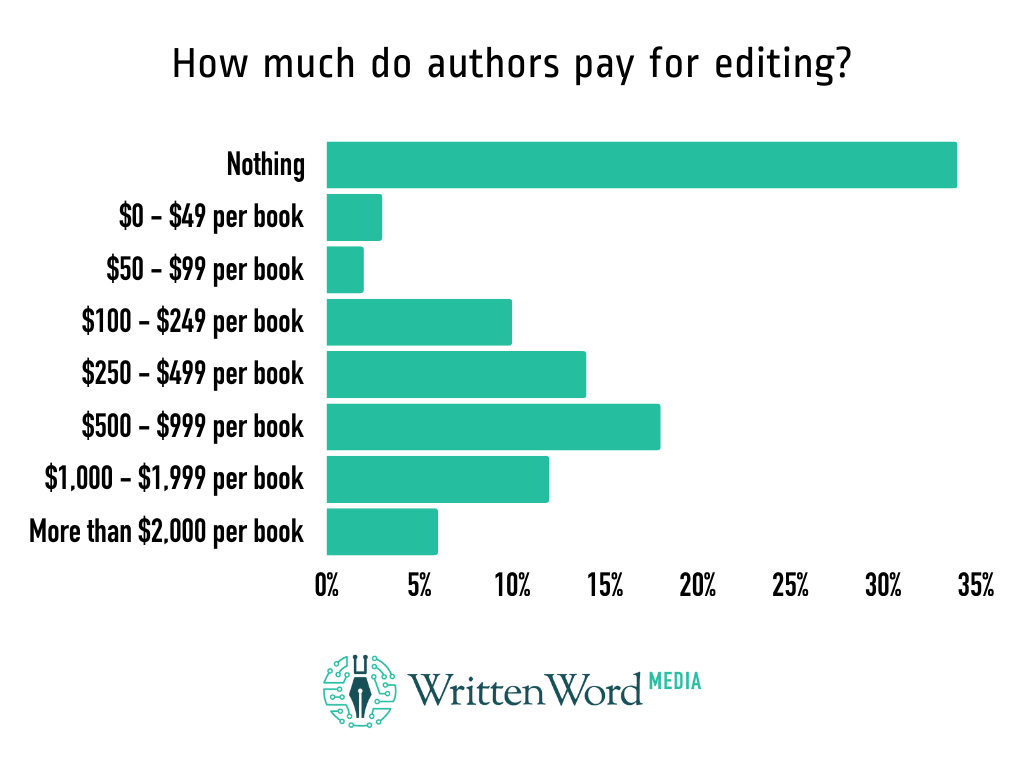
A few strong trends emerge when we look at both spend levels and income brackets together.
1. High earners almost always invest — but not necessarily at premium levels
Authors earning over $10,000/month fall overwhelmingly into the $250–$999 and $1,000–$1,999 editing tiers. Only 11 high earners reported spending nothing. Top earners invest consistently in editing — but the majority spend between $250 and $1,999, not $2,000+
2. The lowest earners are heavily over-represented in the “Nothing” category
Among authors earning under $100/month:
-
214 (the largest group) spend nothing on editing
-
Another 53 spend only $100–$249
-
Only a small fraction invest $500+
Newer or lower-earning authors overwhelmingly choose DIY, beta readers, or no editing at all — which may directly affect reviews, read-through, and sales.
3. Spending more is not the magic bullet
The More than $2,000 tier is particularly revealing:
-
Only 4 high earners (Over $10k) invest at that level
-
38 authors spending $2,000+ are earning under $100/month
High-priced editing does not guarantee high income. Many lower-income authors overspend early, before they’ve built:
-
an audience
-
a consistent writing cadence
-
a clear genre strategy
-
a backlist
Smart, strategic investment — not maximum investment — is what correlates with earnings.
4. Mid-range spend ($250–$999) is the “sweet spot” for upward mobility
When we look at authors earning $500–$10k/month, the bulk are clustered in the mid-range:
-
$250–$499: strong representation across $500–$10k
-
$500–$999: even stronger correlation
-
$1,000–$1,999: solid, but slightly fewer
Far fewer mid-range earners are found in:
-
“Nothing”
-
Under $100
-
Over $2,000
Investing something, consistently, between $250 and $999, appears to be a meaningful milestone on the path to higher earnings.
Summary: Editing Spending by Income Bracket
The 2025 survey showed very similar patterns to prior years:
-
Low earners are much more likely to spend $0 on editing.
-
High earners almost always spend something, but not usually $2,000+.
Roughly:
-
Many authors across tiers are spending $100–$999 per book on editing.
-
Only a small minority spend more than $2,000.
-
There is no strong income advantage to going way above that range.
Why Editing Still Matters (a Lot)
Editing matters less for the click and more for the relationship:
-
The cover sells the book.
-
Editing keeps the reader reading:
-
Fewer typos
-
Clean structure
-
Satisfying pacing and payoffs
-
Poor editing often shows up as:
-
1–3★ reviews mentioning “typos,” “clunky writing,” or “needs an editor”
-
Weak read-through to your other books
-
Fewer true fans
What It Means for You 💡
Editing is critical — but the data makes an important point: You don’t need to spend thousands to succeed; you just need to invest enough to produce a clean, professional read.
Here’s how to interpret your stage:
-
If you’re early / low-income:
Beta readers + light professional editing is fine for now, but skipping editing entirely makes it hard to retain readers or build reviews. -
If you’re growing:
Target the $250–$999 range, where the majority of rising earners cluster. -
If you’re established:
You may not need the $2,000+ tier — most high earners don’t use it — but you should be working with trusted, consistent editors.
Ultimately: Editing is less about price, and more about clarity, quality, and reader trust.
A well-edited book boosts reviews, improves read-through, strengthens your brand, and helps every marketing dollar work harder — which is why the authors earning the most treat editing as a non-negotiable investment.
11) Marketing
If there’s one place where authors are loudly on the same page, it’s this: Marketing is the hardest part.
In the 2025 survey, a strong majority (well over 80%) named marketing as the most challenging aspect of being an author—more than writing or production.
This is an overview of how authors rated the following tactics, on average, on a scale of 1 to 5 with 1 = least effective and 5 = most effective:
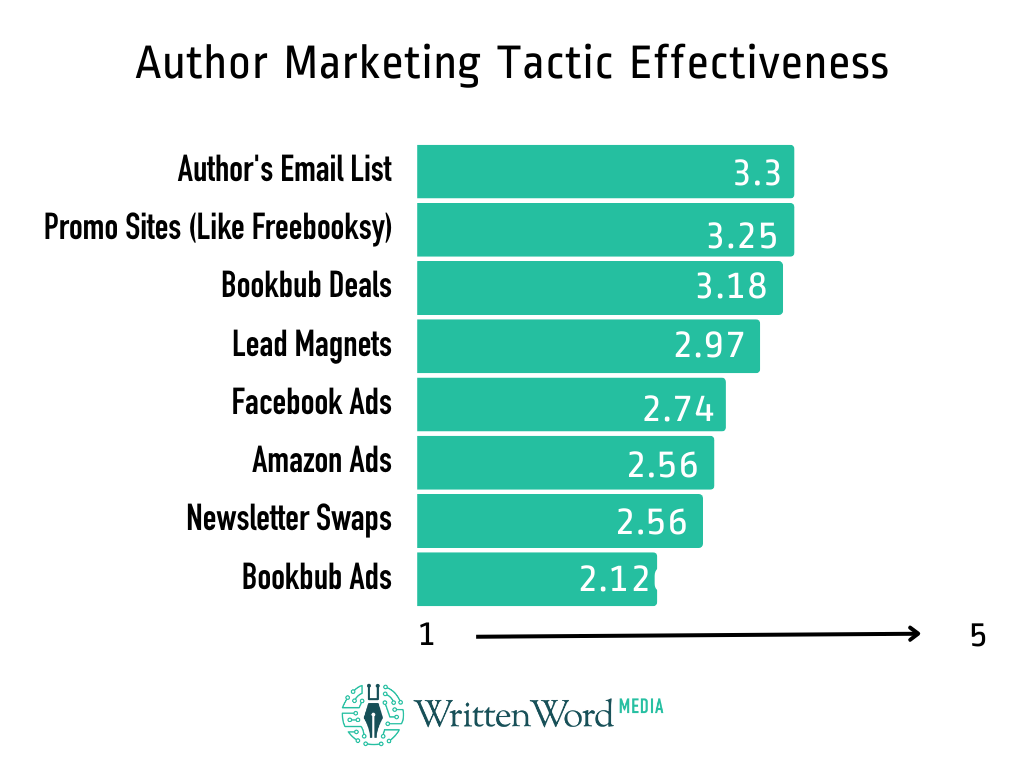
What’s Working Best (The Winners)
From the 2025 data + podcast discussion, here’s how things shake out qualitatively:
Most effective (especially for high earners):
-
Your own email list
-
Promo sites (like Freebooksy, Bargain Booksy, BookBub Featured Deals)
-
Facebook Ads (for those who learn the system)
-
Lead magnets / reader magnets to grow email lists
Mixed / challenging but can work:
-
BookBub Ads
Many authors find these ad platforms hard to optimize, time-consuming and it’s easy to overspend on without clear ROI.
Most polarizing:
-
Kickstarter
-
For some: a huge success
-
For many: a lot of work for little return
-
Very “all or nothing”
-
Trending down in perceived effectiveness:
-
Newsletter swaps
-
Still used
-
But rated less effective than in previous years, possibly due to:
-
Overuse
-
Less engaged lists
-
-
Stacking Tactics: What High Earners Actually Do
One of the biggest 2025 insights: High earners don’t rely on one marketing tactic. They stack them.
Common patterns among authors earning $5,000–$20,000+/month:
-
Strong email list
-
Regular use of promo sites
-
Strategic Facebook Ads
-
Thoughtful pricing & series strategy
-
For some: direct sales layered on top
It’s very rare to see a high earner who is:
-
Doing no email
-
Spending nothing on marketing
-
And relying only on organic retailer traffic
How Much Are Authors Spending on Marketing?
We also asked authors how much they spend on marketing each month. Across all respondents, the average monthly spend was $636 — but that average hides a big spread.
On average, authors in each income bracket reported spending:
-
Over $10,000/month in income: spend about $4,500/month
-
$5,000–$10,000: spend about $1,362/month
-
$1,000–$5,000: spend about $478/month
-
$500–$1,000: spend about $275/month
-
$100–$500: spend about $152/month
-
Under $100: spend about $81/month
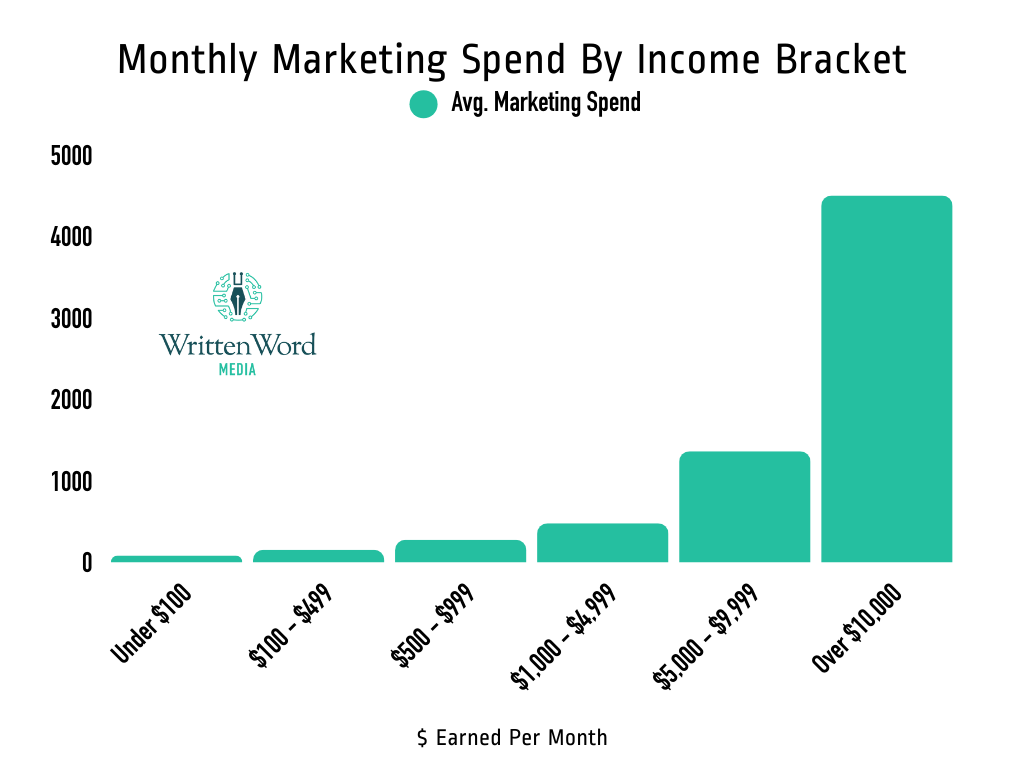
A few things stand out:
-
Higher earners invest more. The authors making over $10k/month are typically reinvesting thousands of dollars each month into marketing.
-
Investment tends to rise with income. As authors move from “earning a little” to “earning a living,” their marketing spend increases steadily at each bracket.
-
You don’t have to start big. Authors in the lower income brackets are often spending under $200/month, then scaling up as their catalog and readership grow.
This doesn’t prove that “spend = success,” but it does show a clear pattern:
authors who are earning more are usually treating marketing as an ongoing business investment, not a one-time experiment.
💡What It Means for You
If marketing feels overwhelming, that’s normal. Almost everyone says that.
You don’t need to spend like a high earner to become a high earner.
Most authors start small. As income grows, spend grows. It’s an evolution, not a leap.
Here’s a simple way to approach it:
Start with the foundations (low or no cost):
-
Optimize your packaging (cover, blurb, Look Inside)
-
Build your email list
-
Test one promo site
These alone can move you meaningfully up the income brackets.
Then scale your investment as your results improve:
Authors earning more tend to intentionally reinvest in marketing — not all at once, but gradually. The data shows a steady climb in monthly spend from about $80/month on the low end to $4,500/month for top earners.
Think of it as a ladder:
-
Start with what you can comfortably invest
-
Track what’s working
-
Increase spend on the tactics that clearly move the needle
As you grow, consider layering in:
-
Direct sales (for those ready to diversify)
The key is to experiment, measure, and double down on what works for your genre and readers. Marketing isn’t about doing everything — it’s about building, step by step, toward the strategy that fits your goals and your stage of the author journey.
12) Email Marketing
If there’s one metric that consistently predicts higher author income, it’s the size—and use—of an author’s email list. The 2025 data shows a dramatic spread in list size across income brackets:
Average Email List Size by Income Bracket
-
Over $10k/month: 18,327 subscribers
-
$5k–$10k: 7,488 subscribers
-
$1k–$5k: 3,986 subscribers
-
$500–$1k: 2,743 subscribers
-
$100–$500: 1,405 subscribers
-
Under $100: 902 subscribers
This is one of the sharpest correlations in the entire survey: the more an author earns, the larger their email list tends to be.
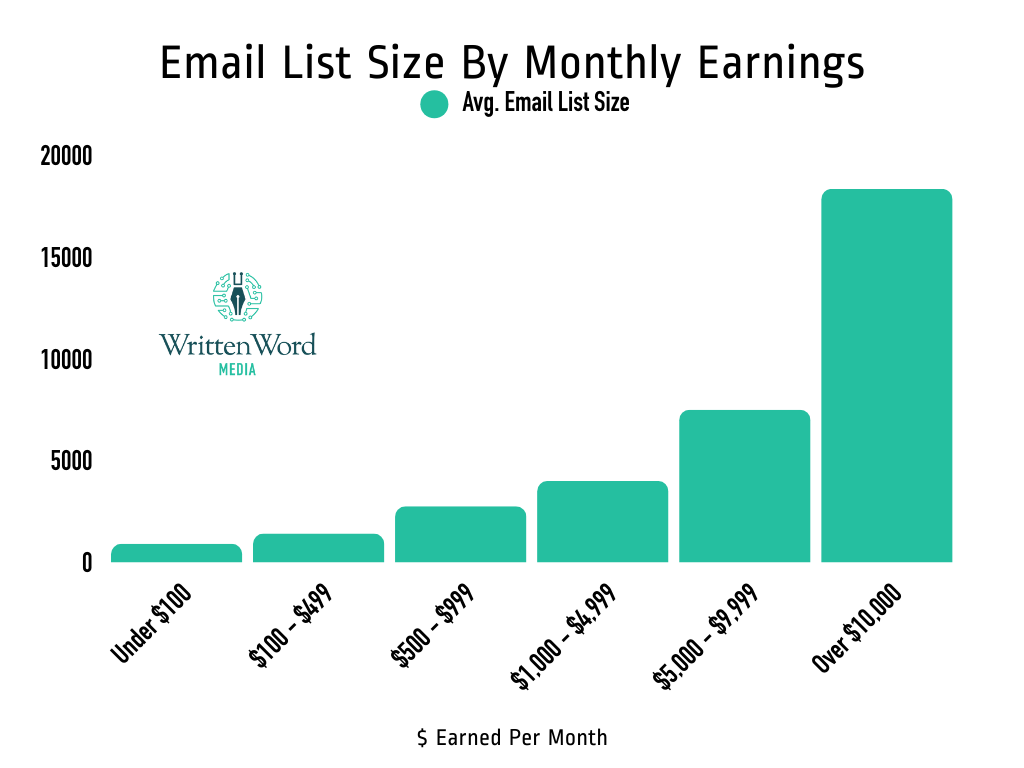
Email List = Income: The Numbers Behind It
Among published authors:
-
Authors with an email list earn a median of ~$300/month
-
Authors without a list earn a median of ~$15/month
That’s a 20x difference.
When we asked about perceived effectiveness:
-
High earners (> $10k/month) rated their own newsletters 4.3/5
-
Low earners rated newsletters ~2.7/5
So the authors who:
-
make the most money,
-
have the biggest lists, and
-
believe most strongly in email
…are exactly the same group.
👉 Top earners don’t just “have” a list—they actively build it and email it.
Why Email Works So Well for Authors
Your email list is:
-
a direct line to your readers,
-
immune to retailer or social media algorithms,
-
one of the highest-ROI ways to:
-
launch new books
-
run promos
-
drive direct sales
-
nurture superfans
-
And unlike ads, which get more expensive every year, email has near-zero marginal cost.
This is why high-income authors rely so heavily on it—and why newer authors underestimate it.
What Effective List-Builders Do
Across both 2024 and 2025, the same habits show up again and again among authors with strong lists:
-
Use reader magnets (free novellas, prequels, bonus scenes) to attract subscribers
-
Place email signup links in their backmatter
-
Join multi-author promotions via BookFunnel, StoryOrigin, Prolific Works
-
Email consistently—not just at launch time
-
Treat their newsletter like a key business asset, not an afterthought
The math is simple:
More subscribers = more reliable launches = more consistent monthly income.
💡What It Means for You
If you remember nothing else from this article, remember this:
Start your email list now.
-
Even if you have one book
-
Even if you’re still writing your first book
Simple starting point:
-
Choose a beginner-friendly ESP (MailerLite, Mailchimp, etc.)
-
Create a reader magnet (short story, bonus epilogue, sample)
-
Put the signup link:
-
On your website
-
In the backmatter of your books
-
On your social profiles
-
Over time, this list becomes the engine of your author business.
13) Sentiment & Community
We also asked open-ended questions about how authors are feeling and where they’re finding community.
The 2025 Emotional Snapshot
After reading hundreds of responses, here’s the vibe: Hopeful but tired. Motivated but overwhelmed. Committed, but facing a lot of uncertainty.
Common themes:
-
Marketing fatigue (“It’s hard, it’s expensive, I’m not sure what works.”)
-
Algorithm + platform fatigue (“Things change constantly; it’s hard to keep up.”)
-
Loneliness (“It feels like it’s just me and my keyboard.”)
-
But also… optimism
-
Authors are proud of their books
-
Many are seeing results
-
There’s a strong desire to keep going
-
“It’s Not Just You”
One of the most important takeaways:
-
The struggles you’re facing—discoverability, ads, burnout, doubt—are extremely common.
-
You’re not uniquely failing. You’re doing author life in 2025.
Who’s Serving Authors Well?
When we asked who is supporting them, authors frequently mentioned:
-
Written Word Media (thank you, truly 🧡)
-
Joanna Penn
-
Becca Syme
-
ALLi (Alliance of Independent Authors)
-
Author Nation
-
James Blatch / Self Publishing Show
-
Dale Roberts
And on the community side:
-
Facebook groups are still the #1 place authors log in weekly.
-
Many authors are active in:
-
Genre-specific groups
-
20Books-style strategy groups
-
Wide-publishing communities
-
Smaller, invite-only mastermind groups
-
Burnout & Community Fatigue
Alongside the positives:
-
Some authors reported stepping back from groups due to:
-
Drama
-
Information overload
-
Time suck
-
Others have found a healthier balance by:
-
Choosing 1–2 core communities
-
Muting the rest
-
Protecting their writing time
What It Means for You 💡
-
If you’re feeling discouraged, you are very far from alone.
-
Plug into one or two caring, practical communities—not twenty.
-
When it all feels like too much, it can help to come back to: “Why did I start writing in the first place?”
Conclusion: What We Learned in 2025
Looking across the 2025 survey, a few big themes stand out:
-
Email is the engine.
Authors with lists earn far more and feel more in control. -
Catalog size + series = leverage.
The more (and more connected) books you have, the more each marketing dollar can do. -
Packaging matters.
Professional, on-genre covers and solid editing are still non-negotiable for serious income. -
There’s no one true path (KU vs wide vs direct).
High earners exist in every camp; what matters is strategy + execution, not dogma. -
Direct sales are growing—but best as a “Phase 2” move.
They shine when layered on top of an existing audience and email list. -
Marketing is hard for almost everyone.
The difference is that high earners:-
Invest something in marketing
-
Stack effective tactics
-
Keep experimenting
-
-
You’re not alone.
The fatigue, the hope, the grind—it’s shared by thousands of authors walking this same road.
As you look ahead:
-
Take one or two insights from this survey and apply them—even in a tiny way.
-
Maybe that’s:
-
Starting your email list
-
Investing in your next cover
-
Planning your first series instead of another standalone
-
Testing a promo site you’ve been curious about
-
There’s no single formula, but there are clear patterns. And every year, more authors are quietly, steadily building the writing life they dreamed about.
We can’t wait to see what you create—and what the data will show us in 2026. 🚀
Brilliant report….thank you so much for the detailed analysis.
Thank you, Gail!
Thank you so much. A truly excellent report. Very informative I have learnt a great deal, almost a bible for authors.
Thanks again for a great survey. I learn more each year. 2025 was weird because my inbox is being flooded by AI-generated marketing pitches from no-name gmail accounts (probably scams). It’s nice to know where I can find the honest experts: Written Word Media.
Thanks for your kind words, Douglas. The AI-generated spam and scams are so unfortunate. We wrote a recent blog on how to protect yourself as this is becoming so widespread (https://www.writtenwordmedia.com/avoid-author-scams/). Stay safe out there!
Oh Wow, this insight was everything for me. A favorite saying of mines is, Knowing is half the battle!
Thank you so much for the info. I was constantly creating but not seeing no rewards honestly. As far as marketing to me it seemed like I am doing all the creations and work but a lot of platforms wants you to sell your books for free to get noticed but wants to charge the Author an arm an leg for their service. How can you pay or keep up when your not making any revenue. Your article gives you options to help you work it out and make it on your own terms. Again, Thank You!!!
Thanks for the feedback!
I wonder if there’s any measure of quantity vs. quality in the data; whether it’s better to write 50 books that are just good enough or to put the same number of hours into writing 5 books that are first rate. I’d prefer to do the latter, but I don’t know if that pays off.
You guys always do a fantastic job with this report. It is crucial information. And for anyone reading this who’s feeling burned out: don’t give up! Seek out a community that feels supportive and don’t be afraid to share what’s going on.
Thanks for sharing this.
Great annual survey results and article. Thanks for putting it together and sharing the results.
Hi, Written Word. An excellent survey. Clear and really informative. A bible for any author. I have learned a great deal. A serious huge thanks.
More and more, Written Word Media is proving to be a reliable partner. Freebooksy is the top generator so far, but building the stack is working too. It’s nice to know there’s someone who has your back! Thanks for all your help and insight!
I found the link to this on one of the Authors Guild forums. So glad it was posted–this is excellent information. I signed up for your newsletter as well, and will be forwarding the link to this blog post to other authors in my author community.
Thanks!
Very informative, inspirational, and helpful view into the hearts, minds, and business approaches of indie authors, Ricci. I host two podcasts for indie writers, a general one and another specialized for science fiction & fantasy — I’d love to feature you as a guest, and we can discuss these results. Join me?
Hello again, Ricci. Here’s the other podcast show I cited, the Science Fiction & Fantasy one, for you to check out if you want to hear my hosting style and get a flavor for the indie author guests I’ve had on… Thanks!
Ricci,
The time and effort it took to compile this information will serve Indie authors for years to come.
May God bless your journey,
Excellent report with lots of good information! Thanks.
Excellent coverage, and so glad to have so many of my vague feelings about the scene backed up by researched data. Many thanks.
Thanks for all the work that went into this. It’s great to get a sense of where things are headed.
There is one take that I’d love to see though: marketing effectiveness by genre. I think email wins across the board, but I’d love to know if there are variances by Genre. For example, for SF, maybe newsletter swaps perform better than FB advertising? Or maybe not. I wonder if the “big” genres like romance mask differences in other genres. I’m willing to bet non-fiction has a different profile, too.
I’ve offered to crunch the data and report on the results for similar surveys, but had no takers. I make the same offer here.
This is such a useful survey–thank you! I wonder if you might address translations in the future? With the world economy in flux, it’s hard to know whether to invest in foreign editions.